Pilgrimage
History of the Divino Pai Eterno Pilgrimage: from a clay medallion to millions of pilgrims
It all began with a small clay medallion found in 1840. See how one family's devotion became one of Brazil's largest pilgrimages.
Updated on October 4, 2026 ✓ Information checked on October 4, 2026 adapted version of the Portuguese original
The Divino Pai Eterno Pilgrimage, held in Trindade, in the Brazilian state of Goiás, is more than 180 years old. In 2026 it reached its 186th edition. Its history blends the faith of a farming family, the arrival of Redemptorist missionaries and the growth of an entire city around the devotion.
This text follows the timeline published by the Santuário Basílica do Divino Pai Eterno, with additions from IBGE (Brazil’s national statistics institute). Where sources differ, the guide says so.
1840: the Barro Preto medallion
In 1840, the farming couple Constantino Xavier and Ana Rosa found, near the Barro Preto stream, a clay medallion about 8 cm across. It shows the Holy Trinity crowning the Virgin Mary. IBGE records that the find happened at Constantino’s brickworks.
The family began to pray before the medallion, and neighbors gradually joined them. According to the Shrine, it was this couple who made devotion to the Divino Pai Eterno (Divine Eternal Father) better known in the region.
Around 1842: the statue and the “first pilgrim”
Constantino wanted a larger image. He commissioned it in Pirenópolis, more than 120 km away, from the sculptor José Joaquim Veiga Valle. Tradition says that, lacking enough money, he left his horse as payment and walked home.
The Shrine’s timeline places the episode in 1842 and calls it the “symbolic milestone of the first pilgrim”. Walking to Trindade still echoes that journey today. More in what is the Divino Pai Eterno.
1843 to 1912: the chapels and the Igreja Matriz
| Year | Milestone |
|---|---|
| 1843 | First chapel, roofed with buriti palm leaves, in Barro Preto |
| 1866 | New chapel (IBGE record) |
| 1876 | Third chapel (Shrine timeline) |
| 1894 | Redemptorist missionaries arrive in Goiás |
| May 29, 1895 | Official arrival of the Redemptorists in Barro Preto |
| 1912 | The Igreja Matriz opens, at the initiative of Fr. Antão Jorge |
The Tourism Supply Inventory (Goiás Turismo, 2020) gives 1848 for the first chapel, but this guide follows 1843, the date adopted by the Shrine and IBGE.
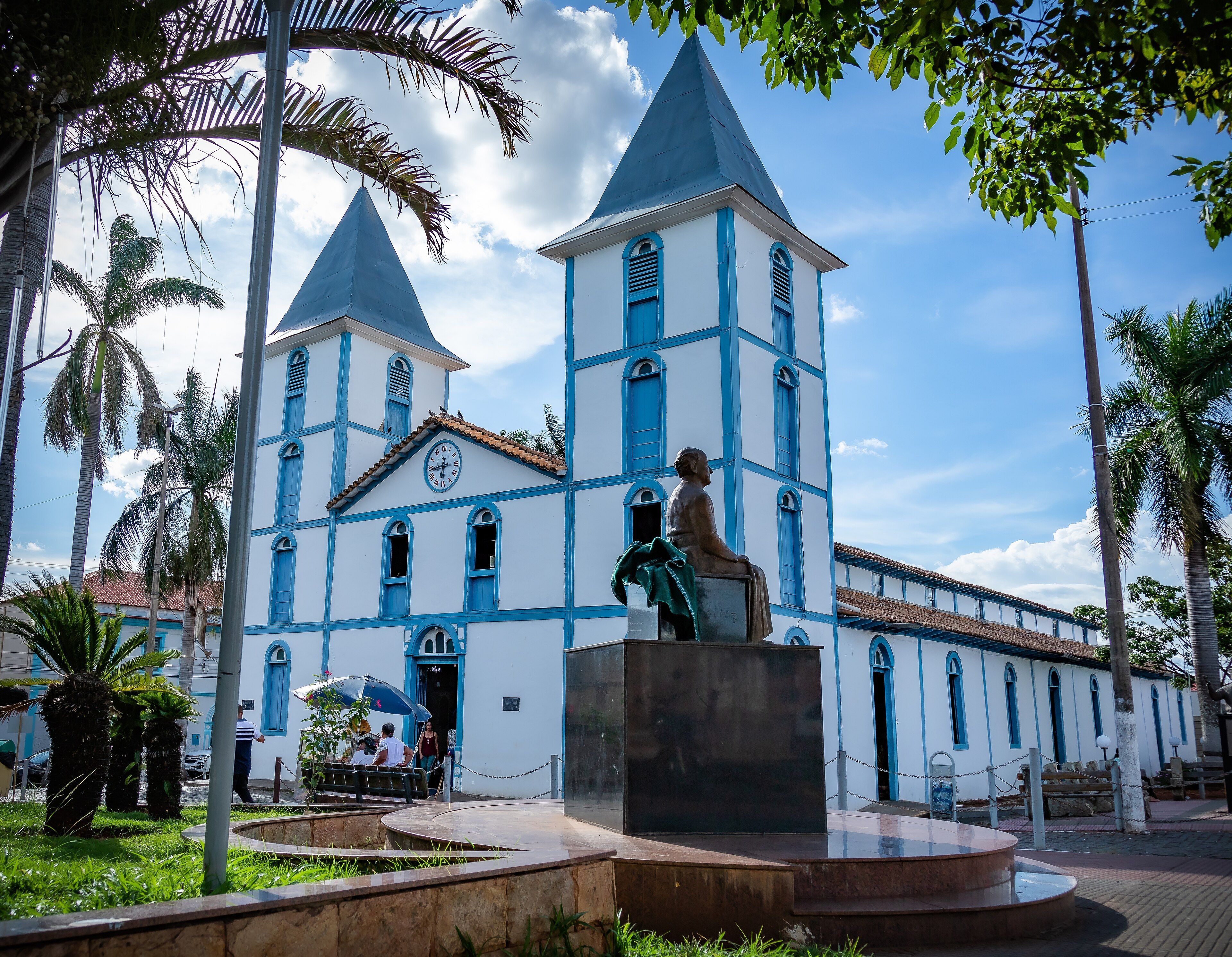
The arrival of the Redemptorists (a Catholic missionary congregation) changed the scale of the devotion. They remain in Trindade today: the Igreja do Santíssimo Redentor holds the remains of Fr. Pelágio and the tombs of other priests of the congregation. The Igreja Matriz, in colonial style, opened in 1912 and is now listed as heritage by Iphan (Brazil’s national heritage institute). See the Igreja Matriz page.
1943 to 2006: the Basilica
The growing number of pilgrims called for a larger church. The Shrine’s timeline records:
- 1943: cornerstone laid, on the pilgrimage’s centenary.
- 1957: the design is presented.
- 1974: celebrations and the novena begin in the new church.
- 1994: renovation and structural reinforcement.
- April 4, 2006: Pope Benedict XVI grants the title of Minor Basilica, at the request of Archbishop Washington Cruz of Goiânia.
- November 18, 2006: the Basilica is formally installed.
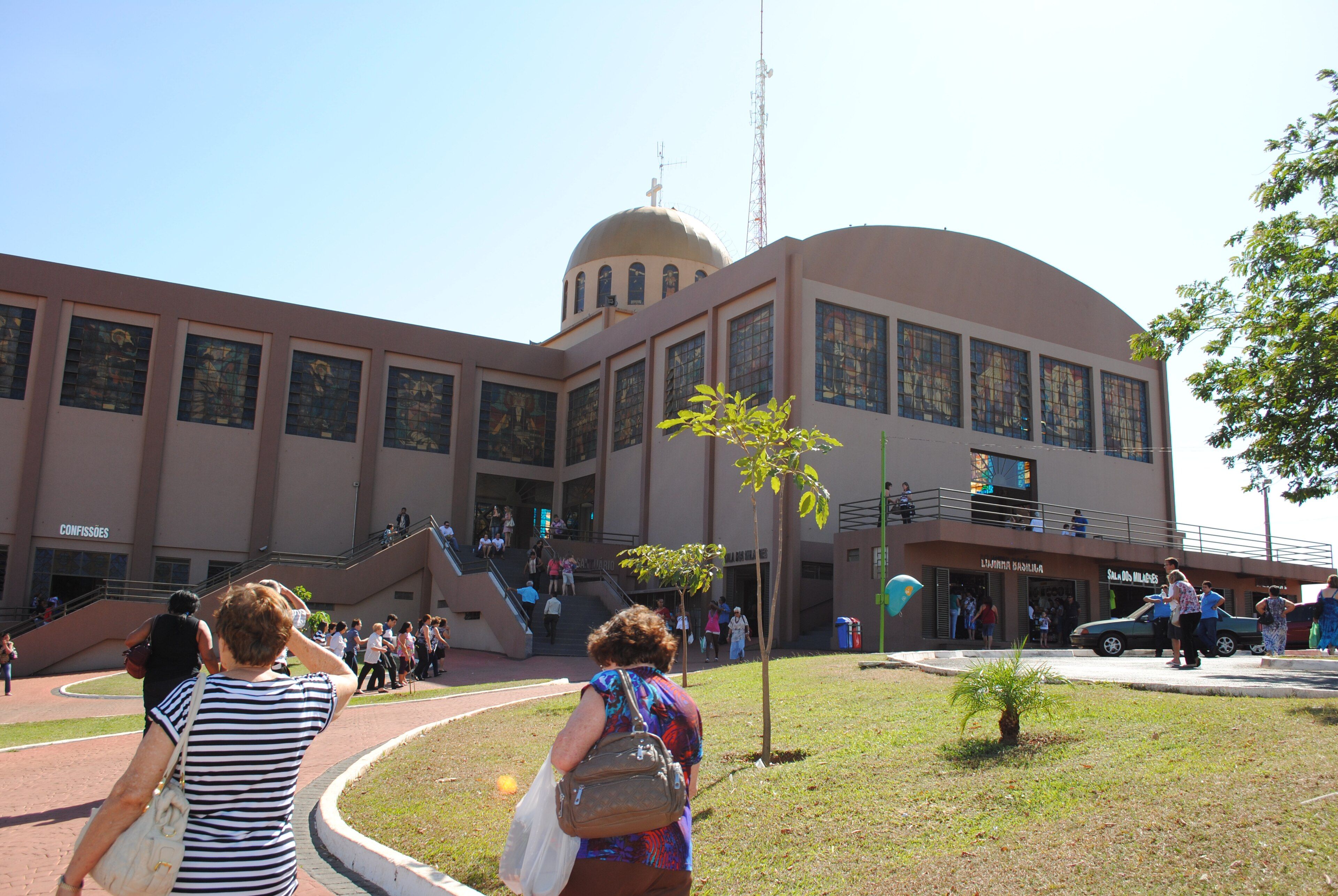
The Shrine states it is the only basilica in the world dedicated to the Divino Pai Eterno. Discover the Santuário Basílica.
2011 onward: the New Shrine
The cornerstone of the Novo Santuário (New Shrine) was laid during the 2011 pilgrimage, and construction began in April 2012. In June 2026, the Shrine reported that the work is at an advanced stage, with the main structure in place, and that it continues according to donations, with no completion date announced.
In 2025 the Vox Patris bell, weighing 55 tonnes, arrived in Trindade; it will be installed in the new church’s bell tower. Learn more in New Shrine.
The growth in attendance
The Shrine’s timeline gives attendance estimates over the years:
| Year | Estimated attendance |
|---|---|
| 2012 | 2.6 million |
| 2014 | about 2.8 million |
| 2017 | about 2.9 million |
| 2018 | about 3 million |
| 2019 | about 3.2 million |
| 2020 and 2021 | online-only festival (pandemic) |
| 2023 | about 3.6 million |
| 2026 | 4.2 million (City report) |
In 2020, for the 180th Jubilee, the original medallion was shown to the faithful on July 5, a rare event: it is normally kept inside the Santuário Basílica.
Traditions passed down through generations
Some Pilgrimage practices go back to the devotion’s rural origins:
- The walk: thousands of people make the journey on foot along the GO-060, the Rodovia dos Romeiros (Pilgrims’ Highway). See walking from Goiânia to Trindade.
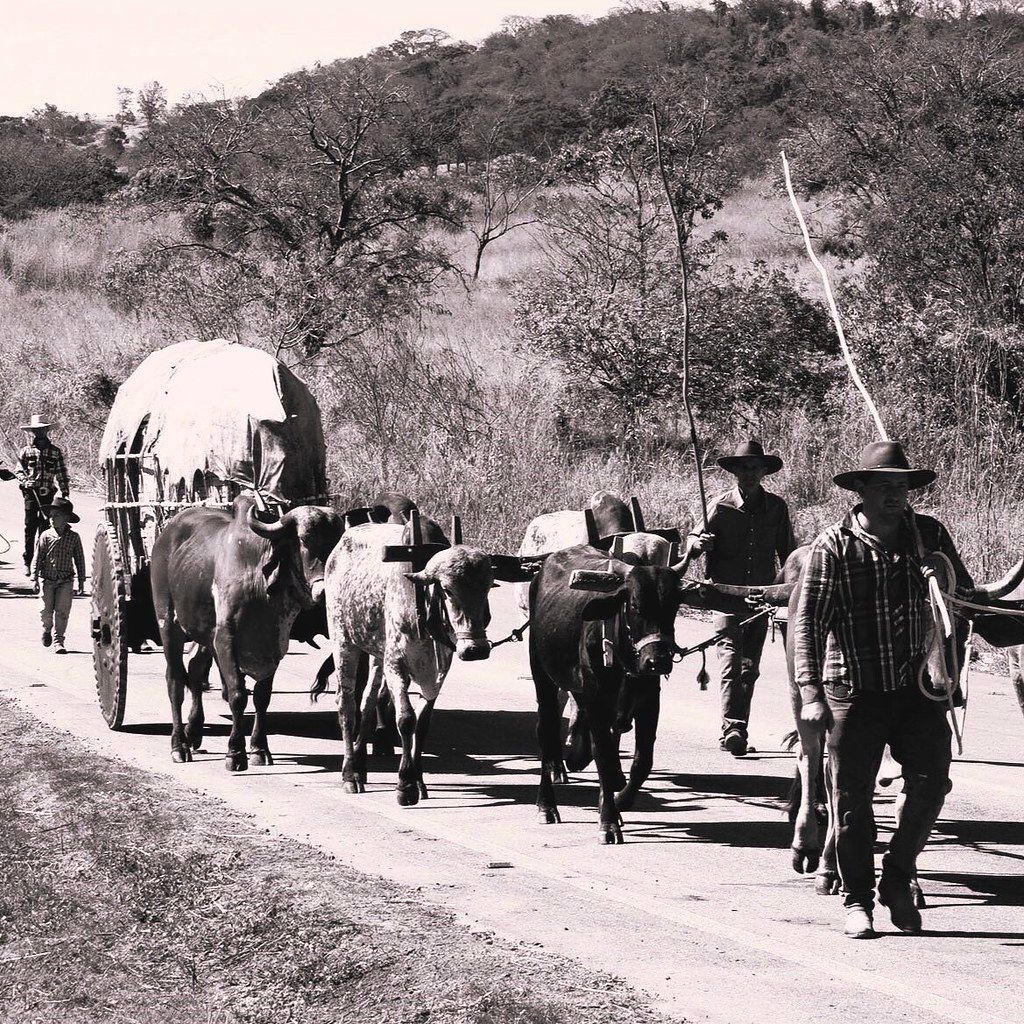
- The ox carts: carreiros (ox-cart drivers) from several regions arrive in convoys and parade through the city. The City reports that the Ox-Cart Pilgrimage is recognized by Iphan as intangible cultural heritage. Read ox-cart pilgrims.
- The procession with the original statue: the image carved by Veiga Valle only leaves the Shrine on the day of the Grande Festa.
From devotion to city
The village of Barro Preto grew around the pilgrimage and became Trindade. The municipality’s administrative history, with its emancipation celebrated on August 31, is in history of Trindade.
Frequently asked questions
How did the Trindade Pilgrimage begin?
In 1840, the couple Constantino Xavier and Ana Rosa found, near the Barro Preto stream, a clay medallion showing the Holy Trinity crowning the Virgin Mary. The family's devotion attracted neighbors and gave rise to the pilgrimage.
Who is considered the first pilgrim?
The Shrine's timeline calls Constantino's journey to Pirenópolis around 1842, to commission the statue from Veiga Valle and return on foot, the “symbolic milestone of the first pilgrim”.
Has the Pilgrimage ever been canceled?
In 2020 and 2021, because of the pandemic, the festival was held only online, according to the Shrine's timeline.
Keep reading
Keep planning
-
 The Divino Pai Eterno Pilgrimage in Trindade: complete guide Ten days of faith ending on the first Sunday of July and drawing millions of pilgrims to Trindade. Here is the essential to understand and plan the Pilgrimage. Read guide
-
 What is the Divino Pai Eterno: the devotion, the medallion and the statue of Trindade A small clay medallion, a statue carved in Pirenópolis and a devotion that draws millions. Understand what pilgrims celebrate in Trindade. Read guide
-
 History of Trindade, Goiás: from Barro Preto to the Capital of Faith Trindade was born from a devotion. See how the village of Barro Preto became a municipality, was abolished, was reborn and became the Capital of Faith of Goiás. Read guide